
Sinful Nature- Is it really black & white?
Posted on Apr 8, 2017 by Shera Payne No comments

Reading: Romans 8: 6-11
Sinful nature- is it really black & white? How do we respond?
Romans- a bit of background: Paul was very intelligent, articulate and committed to his calling. When he wrote his letters to the church in Rome, neither he nor other disciples had been there. This church had been founded by Jews who had come to faith during Pentecost (Acts 2). Paul felt an affinity with these believers.
He outlines the Gospel and declares his allegiance to it, and stresses the necessity for God’s intervention in our lives. He talks about salvation being available to all regardless of race, sin or heritage. He talks about being saved by grace through faith and the freedom that comes with being saved. He goes on to concentrate on freedom from the power of sin and in chapter 8 starts to explore issues of being led by the flesh and led by the spirit.
Paul says if you sin you’re doomed. Don’t sin and you will live forever with God.
Life or death, eternity or damnation
THE BIG QUESTION IS: Is it really that black and white? How do we respond to those who sin?
Paul often thinks in terms of opposites, which he does throughout this passage. In v. 6 he emphasises that being controlled by sinful nature ends in death, whereas the opposite is true when, letting yourself be controlled by the Spirit, you find peace and life everlasting.
At face value, Paul seems to define all people as being firmly in one of two camps:
- Those dominated by what he calls their “sinful nature”
- Those who are controlled by the Holy Spirit
What is this “sinful nature”? In older texts the Greek translates as “flesh” or “body”. Now having a body in itself is not a bad thing but like many things in life it’s not what you’ve got but how you use it that counts.
There certainly is nothing wrong, for Paul, with having a body. But when the body is used inappropriately – when it is used differently from how God intended the body to be used – then it is a sinful body. You then have the wrong attitude, the wrong approach – you are “letting the sinful nature control your mind” as Paul says in v 6.
If you were to commit your life to the flesh (as defined by Paul) then this is what will occupy your mind and guide your way of life. Flesh, however does not last and will die and so to be focussed on the flesh is to be focussed on death. Flesh dies not only physically but also spiritually, because when you focus on the flesh, then your focus is not on God, on what lasts and is eternal. And so the death mentioned in v6 is not only physical death; it is also spiritual death, separation from God.
All of us would be “dominated by our sinful nature” if Jesus hadn’t offered us a way out, and once we say yes to Jesus, once we let the spirit guide our very being, we want to continue following him as he brings peace and life.
Paul needs to open the eyes of his hearers — who are already believers — to the reality of where they are. They are in the Spirit and so they can allow their deepest desires and the focus of their lives to be about God’s life and peace.
This resonates with us today- we need to be reminded where the focus of OUR lives should lie. This is not easy, there are many diversions in our world which take us away from God. Some are freely chosen, while others are forced on us. Our ability to resist is often called into question.
God’s Spirit is the Spirit of life and of the power of life. The Spirit of the one who raised Jesus from the dead dwells in believers (verse 11a). The power of God’s Spirit is such that even the inevitable deaths of our bodies cannot deny the life of God’s Spirit. God’s Spirit will give life to our bodies in the same way as God’s Spirit did to Christ’s body.
But let’s not assume that leading a spirit-filled life means never sinning. We know that we are sinners and that none of us- NOT ONE- can lead a sin free life. So, when we do sin (and sin we must) does that mean we’re suddenly thrown out of the Holy Spirit club and now have to live a life hanging out with those who are dominated by their sinful nature?
Well, no because that would leave no room for forgiveness or redemption.
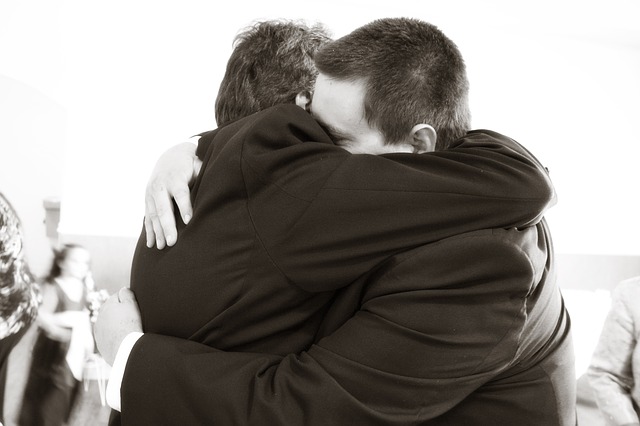
Romans 6:4 shows that regardless of what we do, how much we sin there is always the opportunity of redemption: “ we died and were buried with Christ by baptism. And just as Christ was raised from the dead by the glorious power of the father, so we may live new lives”
When your life is Spirit-directed and Spirit-controlled, the focus is on life (both in this world and in the next; see 5:21, 6:4, 6:22-23) and on peace (both with God and with other people; see also 5:1 and 1:7).
All this talk about flesh and sinful nature does sound a little dated- a bit hell & damnation. The concept of sinful nature shouldn’t be thought of as restricted to physical actions. Ambitions, thoughts, ideas, desires and ideologies can all be of a sinful Nature if God isn’t at the heart.
In other words, by definition, anything – action or thought- that is self indulgent is godless and not spirit led. But this also is SO unsatisfactory and can’t be what God intended- surely He didn’t create us so that we gain no enjoyment in life? Did He?
This is the 64 million dollar question- where do we draw the line between living a life dedicated to God and living a Godly life which we enjoy for life’s sake. In the days of Oliver Cromwell, Puritans would have us only engage in actions and thoughts which glorify God; nothing else was permissible.
On the other hand is not a fulfilled, happy life testament in itself to glory of God’s creation?
In other words if you’re having a great time isn’t this a sign of having been created by a loving God?
Hmmmmm.
This is getting complicated….
We all have our own idea of how much time money and effort we can lavish on ourselves, and we wouldn’t for instance feel easy being told that going out for a slap up meal is submitting to our sinful nature, would we?
Let’s push this a bit further- what about spending time on our appearance to be more accepted, more popular? To fit in? is this narcissism? Is that sinful?
How about following a specific doctrine? Is it a sin to interpret the Bible in a way which isn’t agreeable to other followers of Christ?
These are all thoughts rather than opinions and what I am leading up to is a the meatier issue of forgiveness
If we do something that is perceived sinful by others but not by ourselves, what do we do? Who is to say that these “others” are capable of understanding whether what we have done is a “sin” at all? Certainly nobody except God can be the judge.
So, do we ignore what others think & say? Re-evaluate our lives? Seek forgiveness?
And if we do seek forgiveness, this should be forgiveness from God first, and later from our accusers.
Too often we seek forgiveness from our accusers to ease our minds and make life easier but it is God’s forgiveness that really counts.
It’s probably easier to seek forgiveness than to forgive. Christ taught us to “ forgive those who trespass (sin) against us but it sure ain’t easy.
This country has recently experienced appalling acts of terror and violence. We cannot comprehend the mind of the man who drove that car at speed over Westminster Bridge. We cannot understand his motives or begin to imagine any justification for his actions in the context of the will of the God he followed.
To say that the cause of this is sinful nature is a gross understatement. But what of the response?
Acts such as this happen on a daily basis somewhere in the world and usually precipitate retaliation, prejudice, distrust and hatred.
Last Wednesday’s events doubtless raised these feeling and more in the hearts of many, but isn’t this exactly what the devil might want in order to divide society? Isn’t this exactly the way to strengthen the sinful nature of us all? Isn’t this just the best road to take to a Godless world?
If we really, sincerely, are followers of Christ and really, sincerely want to work to oppose sin then we have to resist the urge to retaliate, denounce prejudice, have faith in trust and learn to forgive.
And this is the bitterest of pills to swallow. Forgiving does not mean you condone the act carried out against you.
It does not mean the consequences of that act no longer matter.
It does not mean that you are “siding with the enemy”
What it does mean is that the spirit is giving you the strength to overcome the will of the devil who wants to divide society and pit us against God’s will.
Think of Provost Howard following the destruction of Coventry Cathedral in 1940. He made a commitment not to revenge, but to forgiveness and reconciliation with those responsible.
Using a national radio broadcast from the cathedral ruins on Christmas Day 1940 he declared that when the war was over he would work with those who had been enemies “to build a kinder, more Christ-child-like world.”
I quote from the cathedral website: “It was this moral and prophetic vision which led to Coventry Cathedral’s development as a world Centre for Reconciliation, which over the years has provided inspiration and support to many Christians addressing ongoing conflict in contemporary society”
With more and more recent acts of insanity against God’s family (all of us) perhaps now this is more relevant than ever.
Talk by Andy Littlewood